

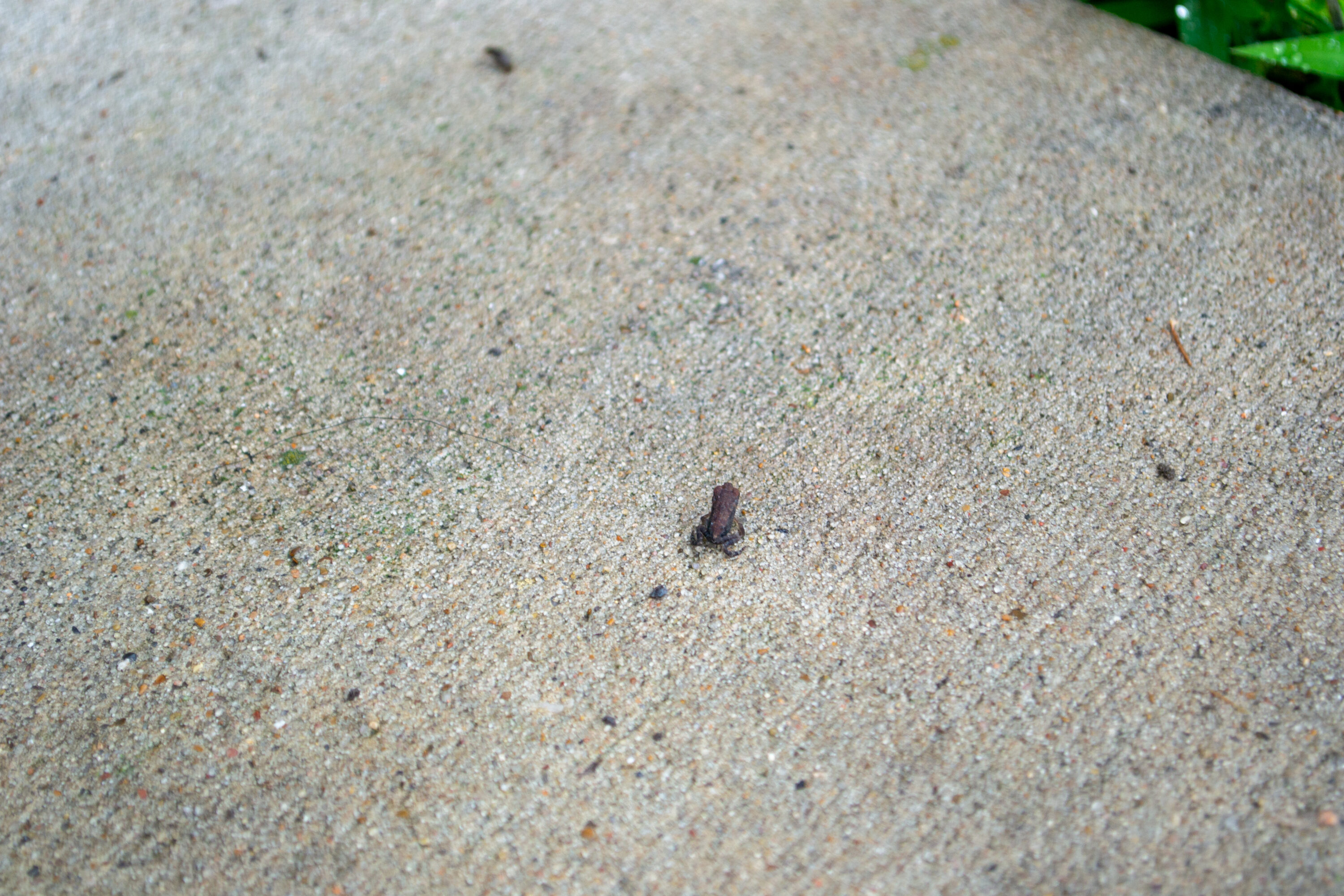
Nearly every year, the Houston area becomes inundated with millions of tiny, penny-sized toadlets.
While they may look like baby frogs, these little amphibians are actually young Gulf Coast toads, which are native to the Gulf Coast region. According to Brittany Crews, a toad keeper at the Houston Zoo, Gulf Coast toads typically turn out in large numbers following heavy rain, like the region experienced earlier this week.
"Their breeding season is pretty long," Crews said. "It runs from like March to September, but earlier this year, it was pretty dry. We weren't getting a whole lot of rain so you probably weren't seeing a lot of breeding, but this past month has been quite rainy, and these guys are explosive breeders."
Crews said rain typically triggers a "massive breeding event," which results in thousands of eggs being laid. According to the Oso Bay Wetlands Preserve and Learning Center in Corpus Christi, a single Gulf Coast toad clutch can contain up to 20,000 eggs.
"When we have a nice rainy spell at night, the males will congregate at ponds, and they will chorus, and that draws the females in," Crews said. "About a month, month-and-a-half, depending on temperatures after the eggs are laid, the toadlets will start emerging out of the pond, and they will emerge out in mass in sheets of toadlets moving away from the pond."
Despite their sometimes overwhelming numbers, Crews said the toads are not invasive and instead play a critical role in keeping the bug population under control.
RELATED: Mosquito population surge prompts public health emergency in Fort Bend County
"They are great with pest control," she said. "They're going to eat a lot of the critters; they eat a lot of spiders, roaches, basically anything that they can fit in their mouth, they're going to eat. So they're really great to kind of have around the garden."
The abundance of Gulf Coast toads in the region stands in stark contrast to the Houston toad— an endangered species whose natural habitat has shrunk to the point of no longer including the species namesake.
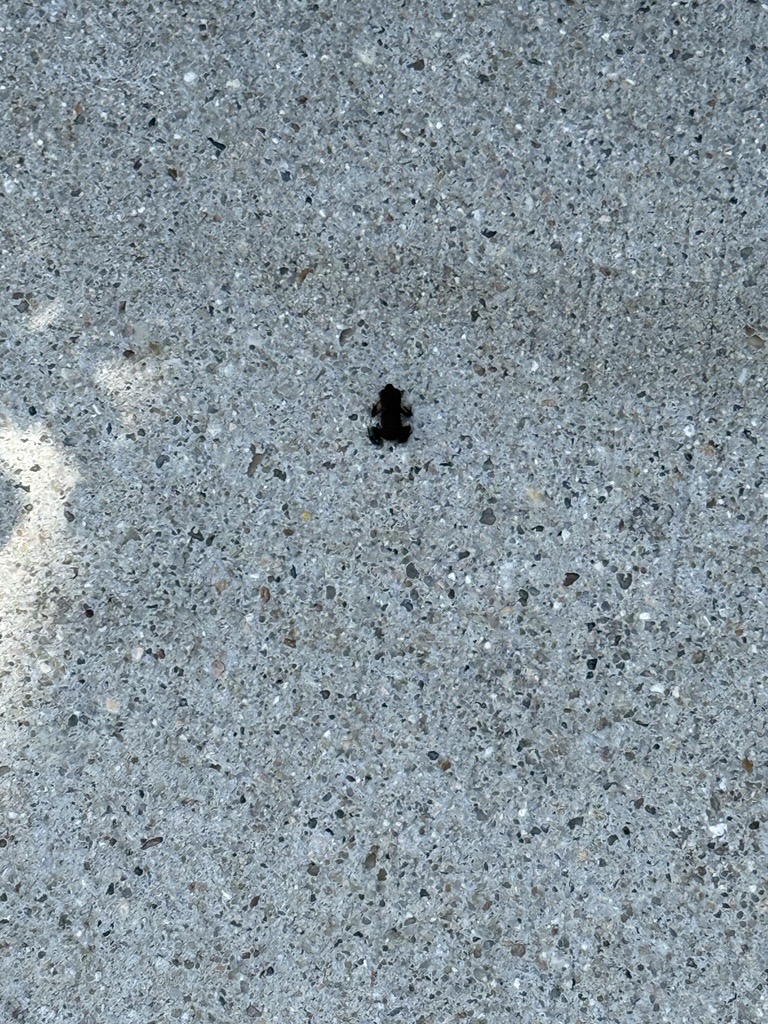
Crews, who helps breed Houston toads to be reintroduced to Bastrop State Park, said the Gulf Coast toad is less picky about its environment.
"The Houston toad is a habitat specialist," she said. "They have very particular requirements for their habitat. They need a deep sandy soil, and they need kind of a natural habitat more so than the Gulf Coast toads, who I like to say are kind of like cockroaches. You can find them anywhere."
For those who may be dealing with an influx of Gulf Coast toadlets at their home or garden, Crews said not to worry too much.
"They're not going to completely decimate the bugs in your garden because they will continue to move away from the pond as they grow," Crews said. "It's not like you're going to have thousands of toads in your backyard. ... They will take what they need, and they will move on."
Crews said gardens are a great way to help natural amphibian species like the Gulf Coast toad.
"Just simply having a pollinator garden in your backyard where you have a nice natural space that's going to bring in a bunch of bugs and you're going to get some nice, happy, healthy toads living in your backyard," she said. "Just volunteering a couple of hours to help clear some invasive species is a great way to help native amphibians."
Copyright 2026 Houston Public Media News 88.7