

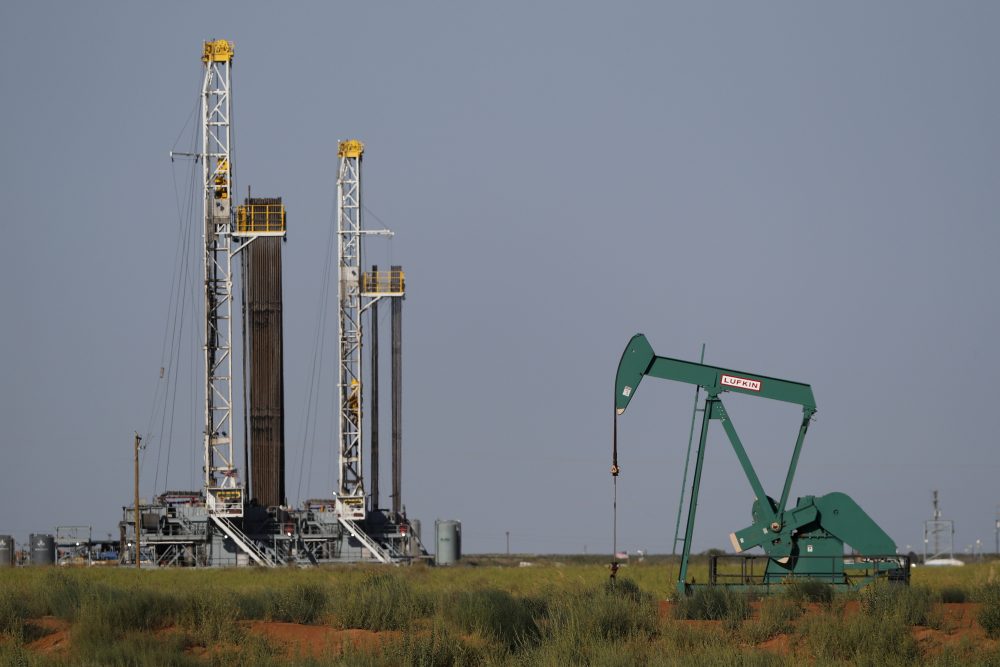
Texas oil firms increased their production during the second quarter of this year, even as prices remained in flux, according to the latest survey from the Federal Reserve Bank of Dallas.
The survey focused on oil and gas firms in Texas, northern Louisiana and southern New Mexico.
Oil prices have skyrocketed during the United States' and Israel's war with Iran, due to the closure of the Strait of Hormuz. However, energy executives and experts have been hesitant to ramp up long-term production, as the prices have fluctuated amidst ongoing uncertainty during the war.
According to the Dallas Federal Reserve, oil production increased "modestly" during the second quarter of this year.
"They are increasing activity because prices are higher, but there is this uncertainty," said Kunal Patel, a senior business economist with the Federal Reserve Bank of Dallas. "And a lot of it has to do with the fact that this is a supply side shock, not a demand side shock."
If oil prices remain at $100 per barrel or higher for an extended period of time, oil companies could increase production by 2% to 4% next year, according to the survey. Patel said it can also take several months for a new oil well to begin producing.
"In many ways, it takes about eight months for that production to show up," he said. "And so it is consistent that you should see more production growth next year than this year."
Oil and gas companies are also reporting higher costs that "are growing at a faster-than-average pace," according to the survey.
The Dallas Federal Reserve conducted its second quarter survey from June 9 to June 17. The U.S. and Iran announced a memorandum of understanding to end the war on June 15, though President Donald Trump recently announced that the ceasefire hadendedamidst rising hostilities.
Oil and gas exploration and production firms were divided about long-term oil prices.
"If the Iranian war hasn't ended by the end of July, we will see the supply cliff hit, whereby all of the various releases from strategic reserves will have been used and actual physical shortages will start showing up," one survey respondent wrote. "Then all bets will be off on oil prices."
Others felt the high prices will not hold.
"Current political instability in oil markets due to the Iran war has crude oil and natural gas prices inflated," a survey respondent said. "If there is a conclusion to hostilities, there will be continued confusion in the oil markets as normalcy may require time, but eventually calming oil markets will result in significantly lower prices."
Copyright 2026 Houston Public Media News 88.7