

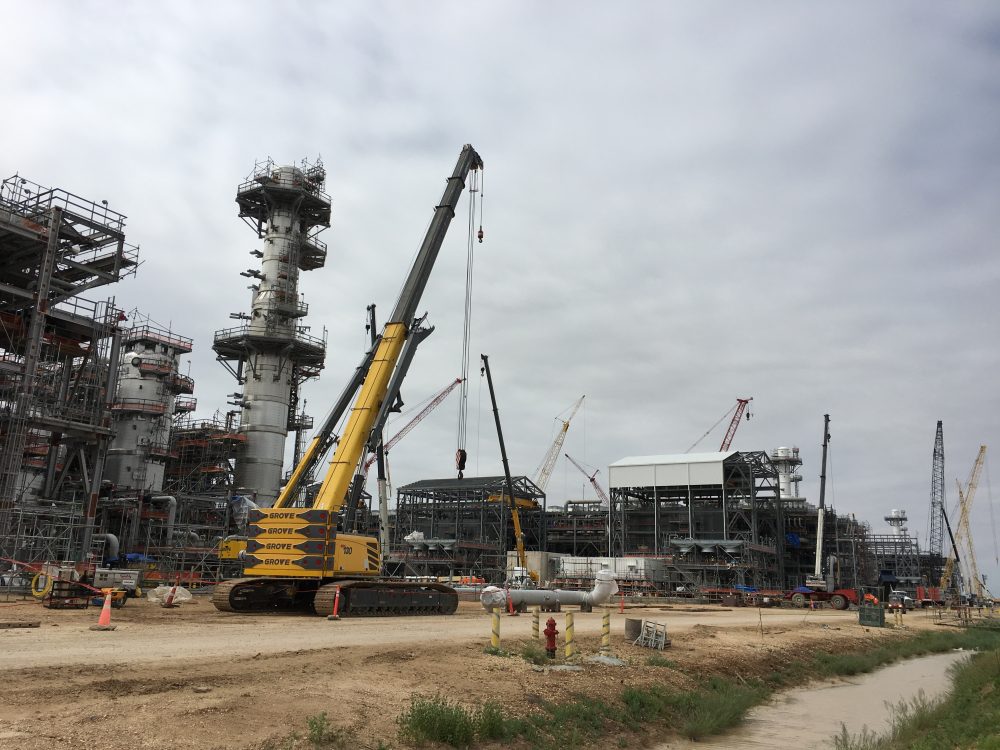
The Texas Commission on Environmental Quality (TCEQ) has fined one of the country's largest liquefied natural gas exporters for alleged air pollution violations dating back to 2019.
The TCEQ said Freeport LNG, located south of Houston along the Gulf Coast, failed to keep its air pollution below the state's regulatory limits and maintain proper records. However, the state agency also agreed to defer part of Freeport LNG's fines and issued a new permit late last year that increases the amount of air pollution the company is allowed to produce.
Freeport LNG paid $103,240 in fines, even as it denied allegations that it exceeded its air pollution limits and failed to meet the TCEQ's record-keeping requirements. Environmental advocates expressed frustration that Freeport LNG received what they view as a minor punishment for repeated violations.
"The fines are too small to get their attention," said Melanie Oldham, director of the nonprofit Better Brazoria County Clean Air and Water.
Freeport LNG declined a request for comment fromHouston Public Media.In TCEQ enforcement documents, Freeport LNG denied the agency's allegations.
The TCEQ did not immediately respond to a request for comment Wednesday morning.
In enforcement documents, state environmental regulators said Freeport LNG has taken steps over the last five years to comply with TCEQ regulations.
The TCEQ has agreed to waive an additional $25,810 in fines if Freeport LNG complies with the agency's enforcement order.
State environmental regulators said Freeport LNG exceeded its allowed emissions of nitrogen oxides, carbon monoxide and volatile organic compounds.
According to the TCEQ, the company released 14.33 tons of unauthorized nitrogen oxides, 118.53 tons of unauthorized carbon monoxide emissions and 7.31 tons of unauthorized VOC emissions.
Those unauthorized emissions occurred between 2022 and 2023. An explosion at Freeport LNG in June of 2022 caused the facility to shut downfor eight months and resulted in excess emissions.
The TCEQ also alleges that Freeport LNG failed to keep emissions below the regulatory limit during startup, shutdown and maintenance activities and failed to abide by some of the state's record-keeping and reporting requirements.
Oldham, with Better Brazoria, said she wants to see the TCEQ reform its enforcement process to create stricter penalties for facilities that violate environmental regulations.
"The way they calculate the penalties makes no sense to most of us either," she said. "They need to come up with a fair penalty process that protects people and gets the company's attention and makes them put some money into their plants to make them safe."
Copyright 2026 Houston Public Media News 88.7