

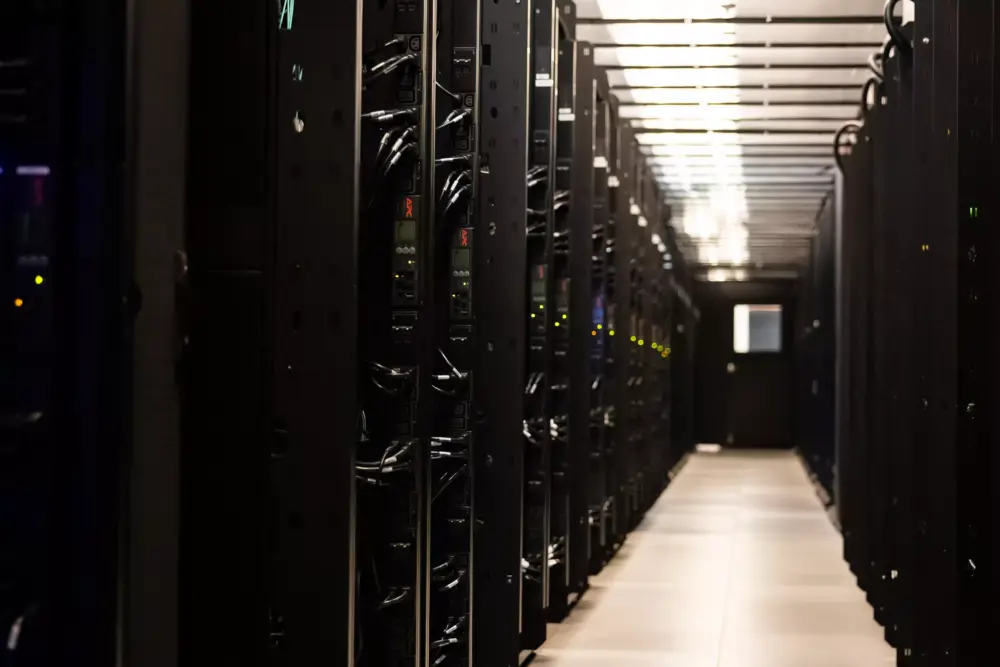
Texas power grid operators are preparing for an influx of data centers.
In the first quarter of this year alone, nearly 200 proposed data centers and other large energy users requested to join the grid.
Currently, data centers and other high energy users, such as cryptocurrency miners and industrial facilities, are seekinga combined 438 gigawatts of power in Texas. That's more than five times the amount of electricity used to power the entire state duringrecord-breaking demand.
But that number islikely inflatedby proposed facilities that will never be built.
"I haven’t really believed the numbers for two years now," University of Texas research scientist Joshua Rhodes said.
Texas has thefastest-growing data center marketin the country andcould lead the nationin this sector in the coming years. As these facilities flock to Texas, the Electric Reliability Council of Texas, also known as ERCOT, is trying to understand which data center projects are actually feasible — and what infrastructure is needed to build them.
The agency's board will vote on a new process Tuesday that could help weed out some speculative projects.
Rhodes said in the past, data centers and other large energy consumers would go to their local utility providers and ask to join the power grid. But with so many data centers looking to connect, that's no longer feasible.
It's hard to evaluate whether there's enough transmission equipment — such as power lines and transformers — to connect a data center to the grid in a given area, when other nearby projects are constantly being proposed.
"You end up in this never-ending re-study loop," Rhodes said.
Now, ERCOT is developing a new process to evaluate these projects in batches and weed out ones that are unlikely to materialize.
"The criteria may include things like if you have the land, if you have the financing, if you already have ordered components and parts and computers and things like that, that are going to ship," Rhodes said.
Matt Boms, the executive director of the Texas Advanced Energy Business Alliance, has also been following how ERCOT is responding to this influx of project proposals.
He said data centers will also have to make a financial commitment in order to be evaluated before joining the grid.
"The thinking there would be for large loads to put up some investment and some guarantee that they're really coming to do business here in Texas," he said.
As the state faces a ballooning energy demand, Boms said ERCOT's new process could help create a more reliable grid.
"It's saying that large loads can't just appear on the system faster than ERCOT can study them, transmission providers can plan for them and the grid can reliably serve them," he said.
If approved, the process will begin by evaluating a group of data centers and other large energy users known as "Batch Zero." However, ERCOT is still determining who will be included in its first study of data centers and just exactly what criteria they will have to meet.
Tech industry leaders have already provided hours of public comment at ERCOT meetings as the agency continues to grapple with potential changes.
In a statement, the Data Center Coalition, a membership association for the industry, toldHouston Public Mediait's still seeking clarity from ERCOT regarding many components of the new process. That includes factors such as timelines, criteria for joining ERCOT's first study and how projects are prioritized.
"Some data center projects have met all necessary requirements and have been awaiting interconnection for years," Aaron Tinjum, the coalition's vice president of energy, said in a statement. "It is important to ensure that those projects are not further disadvantaged by this process."
Tinjum said the coalition has been engaging with the state's grid operators and "other key stakeholders" as ERCOT develops its new process.
“Texas has an opportunity to build new energy infrastructure that can help lower costs for all consumers, and how it plans for these ‘batches' will drive that investment," he said. "Depending on how ERCOT’s batch study process is ultimately implemented, it could be an important step toward timely and reliable energization for economic development projects in Texas."
If ERCOT approves the new process on Tuesday, it will go to a vote in July by the Public Utility Commission of Texas, which oversees ERCOT.
Speaking at a meeting earlier this year, ERCOT vice president Jeff Billo acknowledged the importance of developing a more structured process for adding data centers to the grid.
“There are a lot of companies that are interested in doing business in Texas," he said, “which means there are a lot of people whose livelihoods are impacted by the work that we do here to integrate those large loads."
Copyright 2026 Houston Public Media News 88.7