

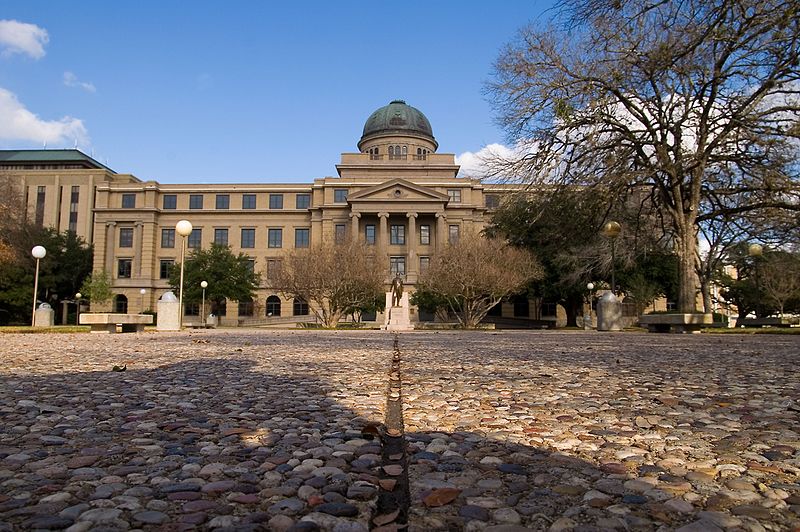
One of the nation's largest university systems has been in a state of academic and political turmoil over the past several months.
Since September, the president of Texas A&M University has resigned, a professor has been fired and subsequently sued the university, the faculty senate has been dissolved and several courses have been canceled due to the system's new race and gender policy — under which faculty can be put on leave or fired if they stray from approved course syllabi.
During this year's first quarterly Texas A&M System Board of Regents meeting Thursday, the board approved the establishment of general education review committees at each of its 12 university campuses. These new review committees will act as an additional level of administrative supervision over course curriculum and were implemented to comply with Senate Bill 37.
Several faculty members and students spoke out against this oversight Thursday, including philosophy professor Martin Peterson, who said the committees were yet another form of censorship.
"We have recently seen several attempts to politicize the university by closing academic programs for ideological reasons and prohibiting important topics from being taught," Peterson said. "Even Plato has been censored at Texas A&M in recent weeks."
RELATED: University of Houston asks professors to sign agreement ‘not to indoctrinate’ students
Peterson's mention of Plato was in reference to his own course syllabus, which, according to the New York Times, was flagged by university administration, who asked Peterson to remove some teachings of Plato — a central figure in Western philosophy.
Texas A&M civil engineering student Robert Day also spoke to the board and said the actions by the regents are causing some to consider taking off their Aggie rings and canceling any future donations to the university.
"I fear the actions this board has taken to cancel the gender studies major, dismissively fire faculty and your capitulation to political pressure bear grim consequences for students who share the same mission I have to lifelong learning and critical thinking," Day said. "Academic freedom is the great equalizer and it is the protector of our ability to learn without fear."
Day's comments on the potential risk to alumni donations came just one day after Jon Hagler, an A&M class of 1959 graduate and prominent donor to the Texas A&M Association of Former Students, published an editorial in the Dallas Morning News saying the regents had failed to protect the university's independence.
Board of Regents chair Robert Albritton said before the vote that the voices of faculty and students had been heard, but the regents could not ignore the law.
"Believe it or not, it's just really not a political issue; it's an issue of where does A&M belong," Albritton said. "Do not believe you can divorce a land-grant state school from Austin. We're not a Rice. We're not a Harvard. We're not a Columbia. We're not privately funded. We are governed by people that are elected by a mandate of citizens of the state of Texas. ... So, as a state institution, we're going to listen to what they say the state of Texas wants."
Leonard Bright is a business professor at the Texas A&M Bush School of Government and Public Service whose ethics class was canceled three days into the fall semester due to the new race and gender policy.
Bright said the continued attacks against academic freedom are beginning to blemish the reputation of the tier-1 public research university — which spends over $1 billion annually on research.
"We've got many professors that are at the top of their class," Bright said. "Right now, it's kind of centralized around [the college of] arts and sciences, but there's no reason why that would not expand into engineering, to science.
"I mean, the issues that this group has are more than just about race, gender and sexuality. They disagree with a whole lot of our science. They don't respect expertise at all. So, eventually, they're going to come for more STEM fields as well."
Bright is also the president of the Texas A&M American Association of University Professors (AAUP), an organization that promotes academic freedom. In addition to hosting a rally on the university's flagship campus in College Station last week, the AAUP has also started a petition against the board of regents’ new policies. The petition had over 1,000 signatures as of Friday.
Bright described the current morale among faculty as low and said the regents could be setting a dangerous precedent for the future of Texas A&M.
"It's going to be rough for the students, and I think Texas A&M will have to decide are they going to drive this university into the ground or are they going to pause and think about the ultimate consequences," he said.
Copyright 2026 Houston Public Media News 88.7